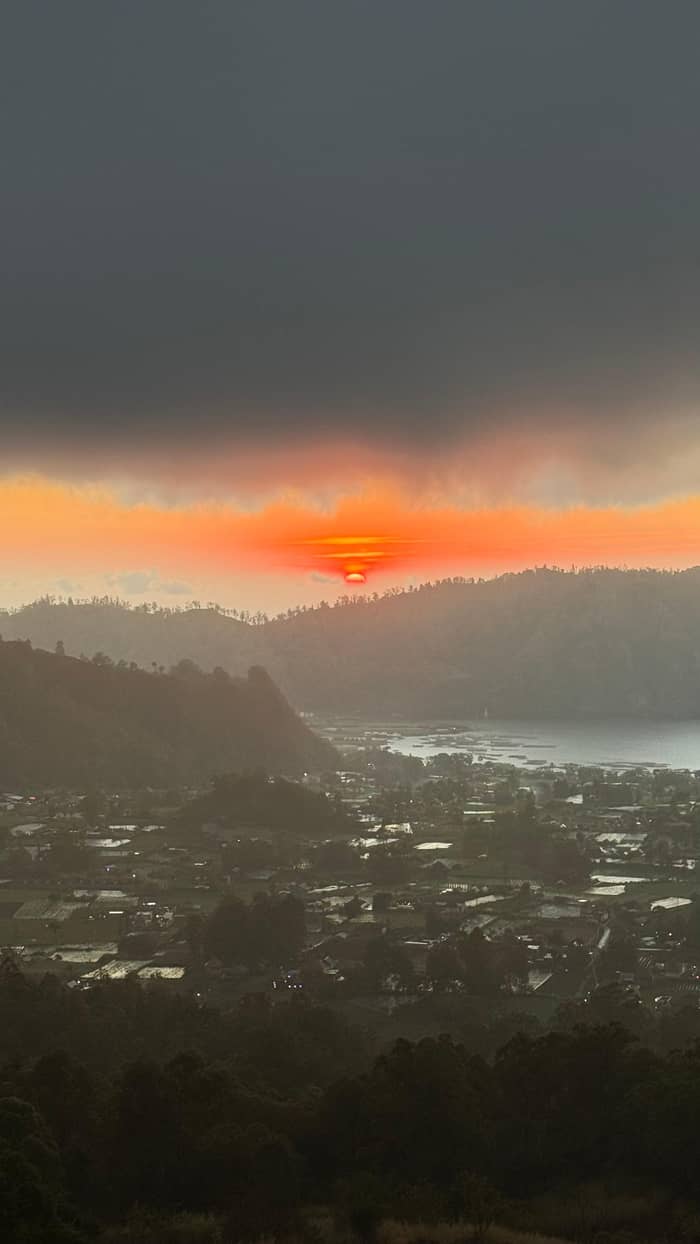
The cheap start
Jeep with a tasting
A sunrise ride with a tasting
- DurationRuns 8 hours
- Pricefrom $21
- Rating4.86
Check-as-you-go list
Checklist · 10 points
Mark each point as you do it; your ticks stay on this device.
0 / 10 ready
You are all set for the jeep. Only the booking is left: your seat in a jeep at first light.
Hold a jeepBali Kintamani coffee, the beans grown around the Batur caldera, has an official certificate behind its name. Here is what that certificate says, how the highland shapes the cup, and how a tasting fits into a jeep morning.
Editorial team, mountbaturjeeptour.quest · Updated November 3, 2026 · About 6 minutes of reading
The compact view
Kintamani coffee is one of the few Indonesian crops that comes with a certificate for its place of origin. The Jakarta Post reported in December 2008 that the directorate general for intellectual property rights at the Justice and Human Rights Ministry had issued the first official geographical indication certificate for Arabica coffee from Kintamani in Bali.1 The certificate answered a request from an association of local farmers and private processors who wanted the coffee's specifications protected and recognized.6 In plain terms, the words "Kintamani" and "Arabica" on a bag are meant to refer to something defined, not to a marketing mood. On a menu in Bali the same coffee goes by its local name, Kopi Kintamani.
The definition has a rulebook. According to the same report, production has to follow a "Book of Requirements" and is controlled on a regular basis.7 The Kintamani production system includes at least 24 groups of up to 100 farmers each, and the report calls it the most expensive coffee of its kind in Indonesia.8 That price remark is a dated one, so read it as history, not as a quote for today's shelf. What survives the years is the structure: a farmer-led association, written requirements and periodic checks.
A law-firm guide to registering geographical indications in Indonesia uses the same coffee as its example of a good registration. It says the coffee has a unique orange taste derived from certain geographical factors, and that this distinguishes it from other coffees and makes it registrable.3 Indonesia.travel puts the flavor differently, as a unique and authentic citrus aroma.2 Orange and citrus are close cousins, and the honest summary is that both sources point to a bright, fruity cup rather than a dark, smoky one.
Claim by claim
| The claim | Who says it | What you learn | What it leaves open |
|---|---|---|---|
| A first certificate | A 2008 newspaper report | The origin has an official certificate | Today's rules and holders |
| A rulebook | The same report | Production follows written requirements | How checks run now |
| An orange taste | A law-firm guide | A bright cup tied to geography | Your own taste |
| A citrus aroma | Indonesia.travel | A fragrance to look for | Which farm you are served |
| Organic care | The Batur Global Geopark | How the farms aim to work | Each farm's practice |
Sources: The Jakarta Post, a law-firm guide, Indonesia.travel and the Batur Global Geopark.1,7,3,2,4
The Batur Global Geopark gives the farming side of the story. It says the coolness, fertility and height of Kintamani-Bangli suit coffee, and that the farms rely on organic or natural fertilizers and little pesticide, with quality and taste as the aim.4 You do not need to take that as a guarantee for every bag. It is a local authority describing how the farms are meant to work, and it is the sort of claim you can reasonably ask a seller about.
The same geopark page touches the luwak, the civet whose digestion is used for the most talked-about coffee on the island. It says farmer groups fence their plantations and let wild luwak live in the garden, and that the Bangli plantation and forestry agency works with the tourism community to manage luwak coffee as agrotourism.11 That is the geopark's account. If a stop on your tour offers luwak coffee, ask where the animals live and where the beans come from, and decide for yourself what you are comfortable paying for.
Altitude shows up in the rest of the menu too. Indonesia.travel lists tilapia from Lake Batur farms in a dish called Mujair Nyat-Nyat, the spiced Kintamani Ayam Betutu and Kintamani Arabica coffee as lunch choices, and says to finish lunch with a cup of the coffee.12,2 A tasting is therefore not an exotic add-on but part of how the highland feeds itself. Sit down with it for ten unhurried minutes, and you will taste the place better than in any rush.
Coffee on the price list
Starting prices per person on GetYourGuide; the figure for your date and party may differ.
A cafe at a viewpoint is the simplest way. Indonesia.travel tells you to be at the viewpoints and cafes of Kintamani by roughly 05:30 to 06:00 WITA, which gets you the best moment and a good table.5 The same page notes that large cafes accept digital payments, while many local stalls and fee posts take only cash.13 Order a cup, hold it with both hands in the cold and watch the light arrive. For most travelers this is the whole tasting they need.
A jeep tour with a tasting built in is the second way. A sunrise jeep listing is titled as including a coffee tasting, runs 8 hours, has 8 reviews averaging 4.86 and costs from $21. Another jeep listing adds a coffee plantation to the route, rates 5.00 from 1 review, carries a wheelchair-access label and starts from $46. Those review counts are tiny, so treat the ratings as a hint, not as proof. Read the itinerary carefully before you book.
A trek that ends at the plantation is the third. A caldera trek with a lake boat and a coffee plantation stop lists 7 hours, a 4.56 rating from 3 reviews and a price from $46. For comparison, this site's main listing is a private sunrise jeep with a hot spring, rated 4.80 from 4,187 reviews and starting from $45; its own details show no coffee stop. If a tasting is a must for you, ask the operator before booking whether your group can add one, and get the answer in writing.
Pick your cup
Match the way you taste to the time you have and the crowd you can bear.
If A quick cup with a view
A rim cafe at 05:30
Cafes fill in this window.5
If A tasting in the jeep day
The jeep with a tasting
Its title lists a coffee tasting.
If I want to see the plants
The jeep and plantation
The listing adds a coffee plantation.
If I want a longer day
The trek, boat and coffee
It lists a lake boat and a plantation stop.
If I only care about the origin
Look for the Kintamani name
Tours with coffee
The cheap start
A sunrise ride with a tasting
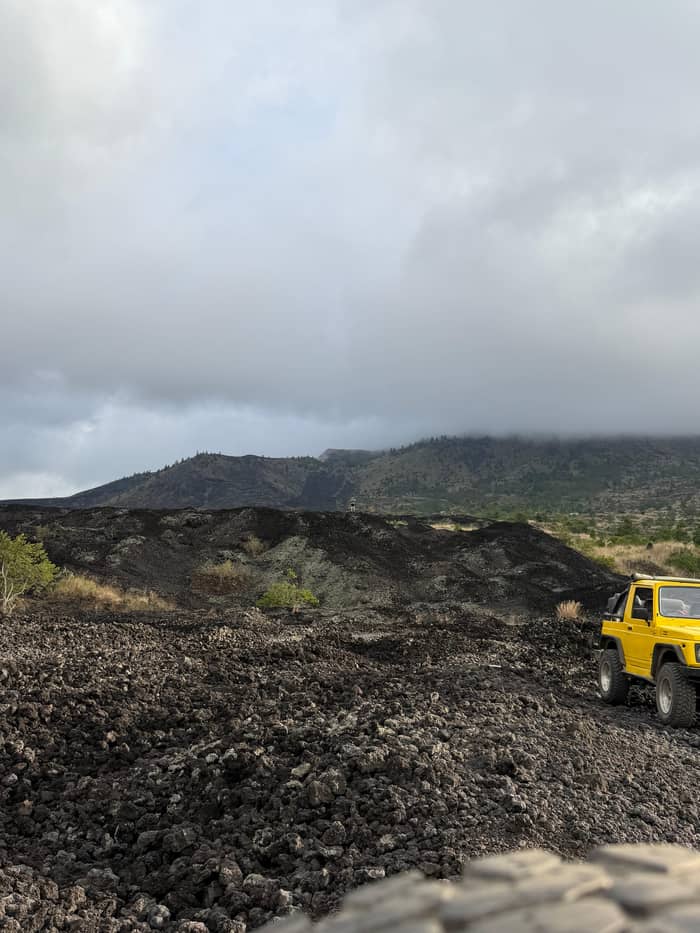
The coffee-farm day
Lists wheelchair access
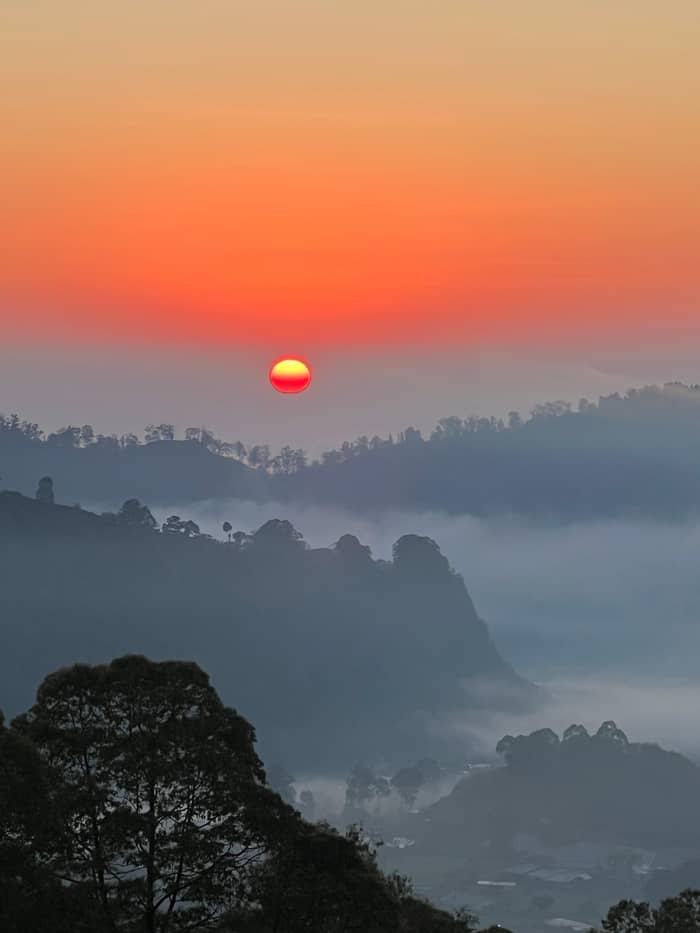
The long loop
Caldera, lake and farm
At a Kintamani coffee plantation, start with the simplest question: where did these beans grow? A farm that grows its own coffee can point at the slope. A stop that only sells packaged bags will give a vaguer answer, and that is not a crime, but it changes what you are paying for. Ask whether the tasting is free or part of a purchase, and whether the cups are brewed fresh or poured from a flask. These are questions a good host answers with pleasure.
Ask what is in the cup. If every cup tastes of sugar, flavored syrup or chocolate, you have been given a drink and not a tasting. If luwak coffee appears on the menu, ask about the animals, because the geopark describes wild luwak living in fenced gardens,11 and you are entitled to see whether the place in front of you matches that picture. Walk away from any answer that sounds rehearsed or evasive.
Keep the visit short and keep your plans flexible. Agree a rough end time with your driver before you step out, and keep the stop short. If the stop becomes a shopping session with pressure, say a polite no and ask to leave. Hot-spring and temple stops, which this site covers on their own pages, are the better use of the remaining time. The point is to taste the highland, not to fill a suitcase.
Party total
Choose a tour and a party size to see the lowest total for everyone.
Set 4 options side by side
Choose a tour and a party size to see the lowest total for everyone.
≈
View≈
View≈
View≈
ViewStarting prices from GetYourGuide, converted into your currency with the European Central Bank's published rate; the checkout holds the final amount.
A coffee morning
01:30 to 03:00
Jeep pickups usually start between 01:30 and 03:00.9
Between 05:30 and 06:00
The cafes fill in this window.5
Around sunrise
Frozen lava flows are a favorite jeep ground.10
Mid-morning
One jeep listing is titled with a coffee tasting.
Late in the morning
Another jeep listing adds a coffee plantation.
Buy whole beans rather than ground, and ask for the roast date if the seller has one. Beans from a small roaster in a sealed bag will outlast a loose scoop from an open tin. The word "Kintamani" on a label matters most when it comes with the name of a farm, a cooperative or a roaster you can look up later. The 2008 report describes a farmer association and a Book of Requirements behind the certificate, which is the system that gives the name its meaning.1,6,7
Think about the trip home before you buy. A sealed bag of whole beans is a gift that outlasts most souvenirs. Heat in a bag is the enemy, so keep them out of a hot car while the jeep driver waits at the next stop. Do not decant them into a thin plastic sack at the stall: ask for the roaster's own bag with its valve intact.
Finally, do not judge the whole origin on one cup. Highland coffee is sensitive to the farm, the processing and the roast, and the cup you have in Kintamani, brewed fresh in the cold, will taste different in a warm kitchen weeks later. Brew it with a method you already trust, use clean water and take notes on the first week. If you liked it, the road up the mountain was the best advertisement the coffee could have.
Video
Tasting Travel on YouTube · Nothing is requested from YouTube until you press play.
The directorate general for intellectual property rights at the Justice and Human Rights Ministry has issued the first official Geographical Indication (GI) certificate for Arabica coffee from Kintamani in Bali
FAQ
A 2008 report describes the first official geographical indication certificate for Arabica coffee from Kintamani.1
It states organic or natural fertilizers and minimal pesticides on Kintamani-Bangli farms.4
One jeep listing includes a coffee tasting and another a plantation visit.
Arrive around 05:30 to 06:00 to secure a spot, the ministry advises.5
It says farmer groups fence their plantations and let wild luwak roam.11
Many local stalls only accept cash, while large cafes take digital payments.13
Sources
Keep reading
Questions about the jeep, the lava or the pool? Ask us here.